
Last updated November 25, 2026
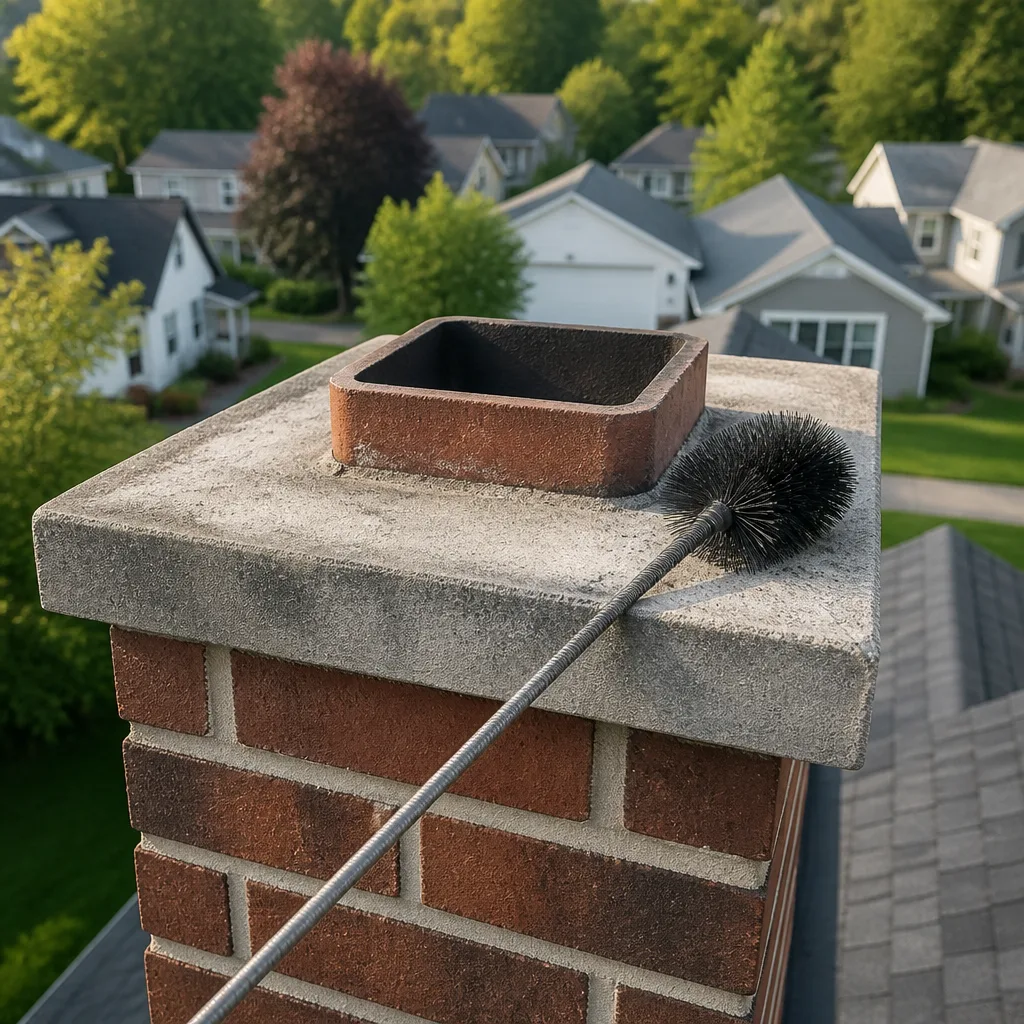 Sweep & inspection
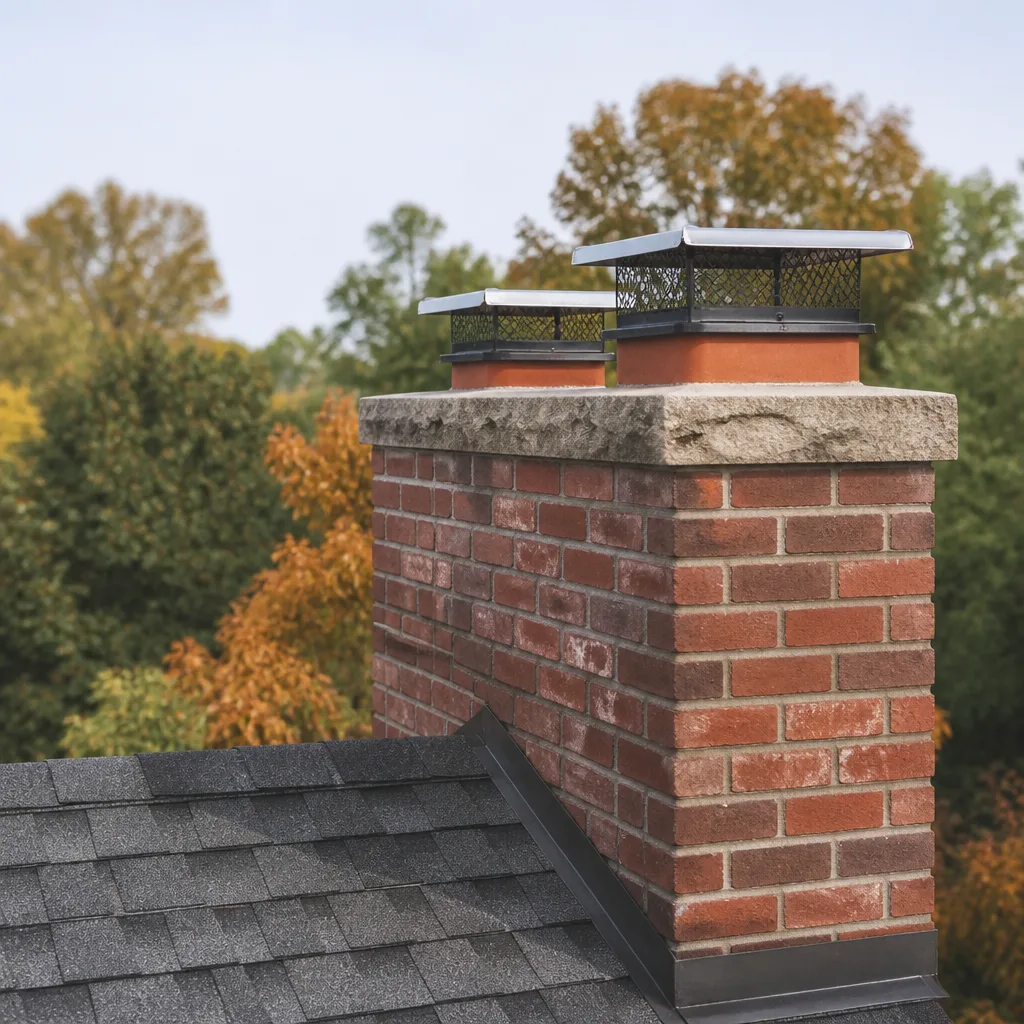 Caps & crowns
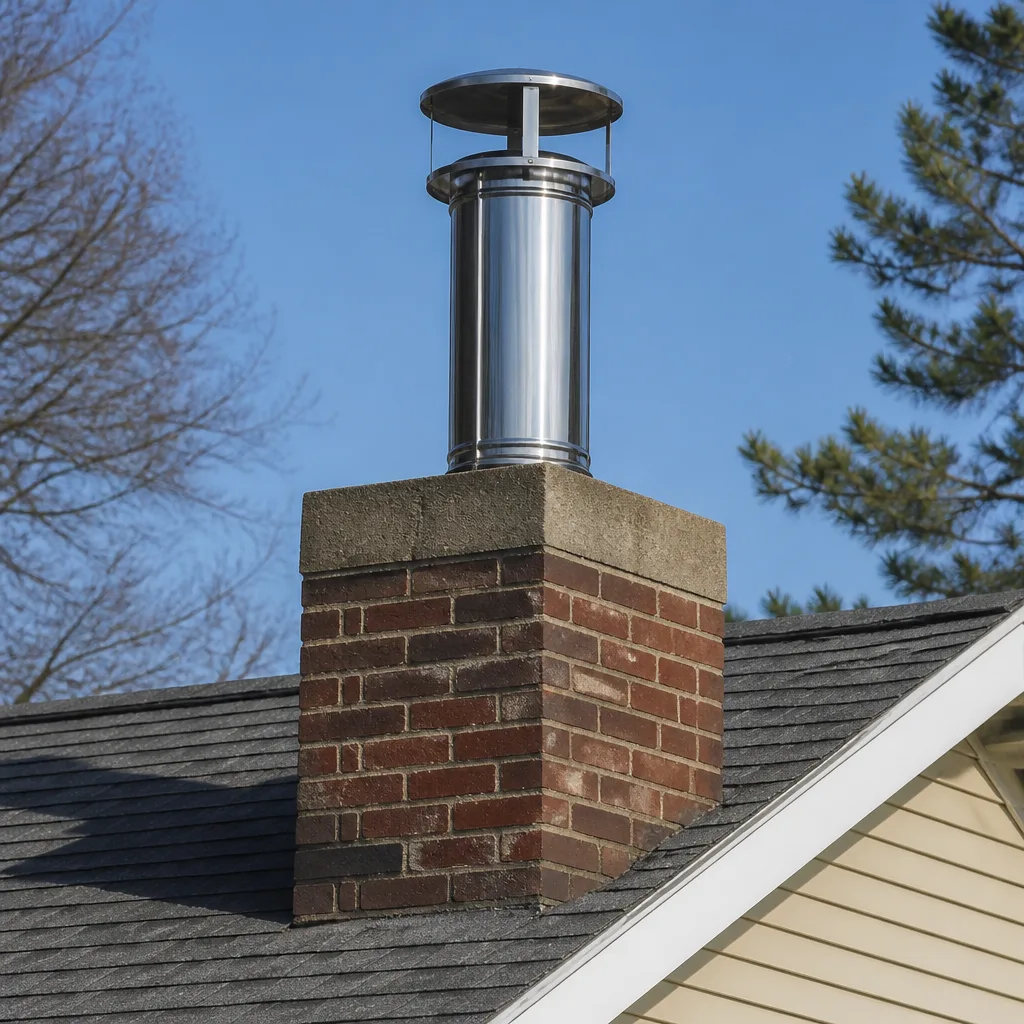 Flue relining
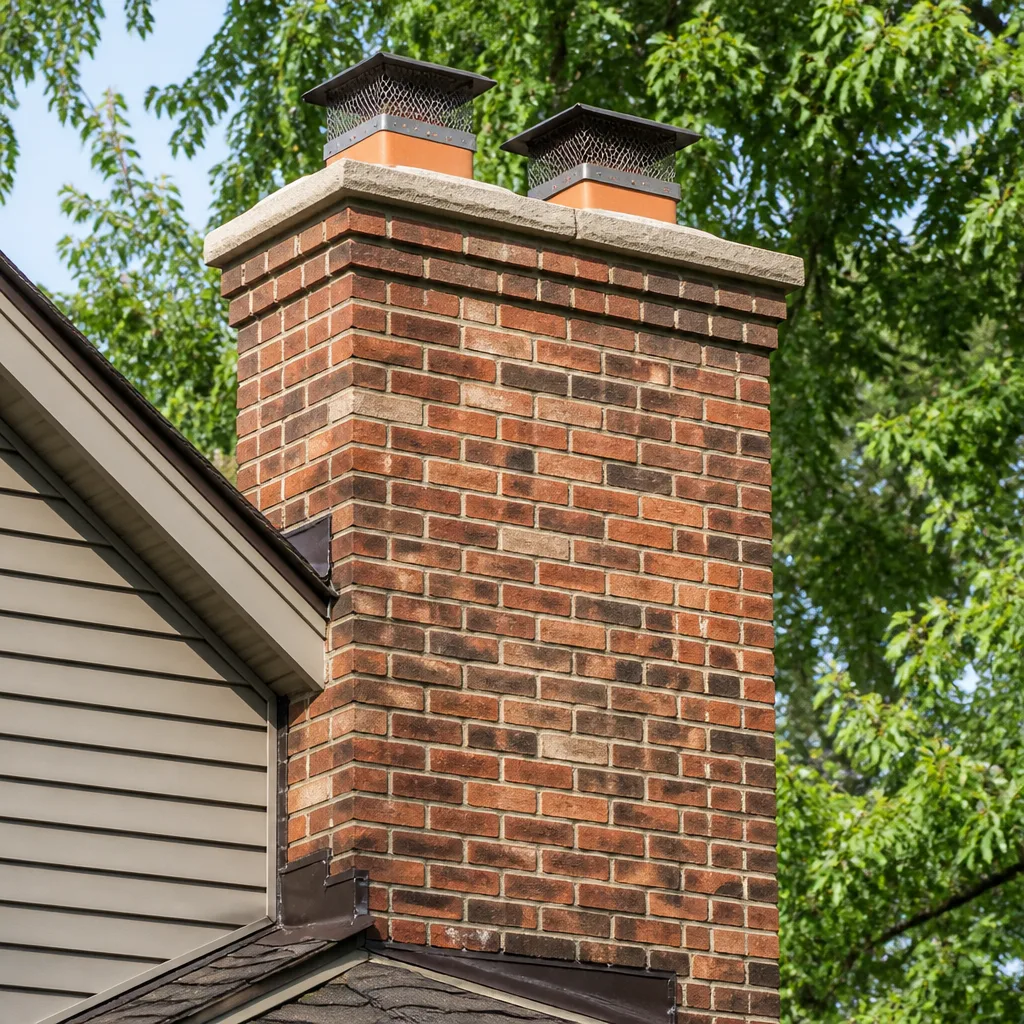 Masonry repair
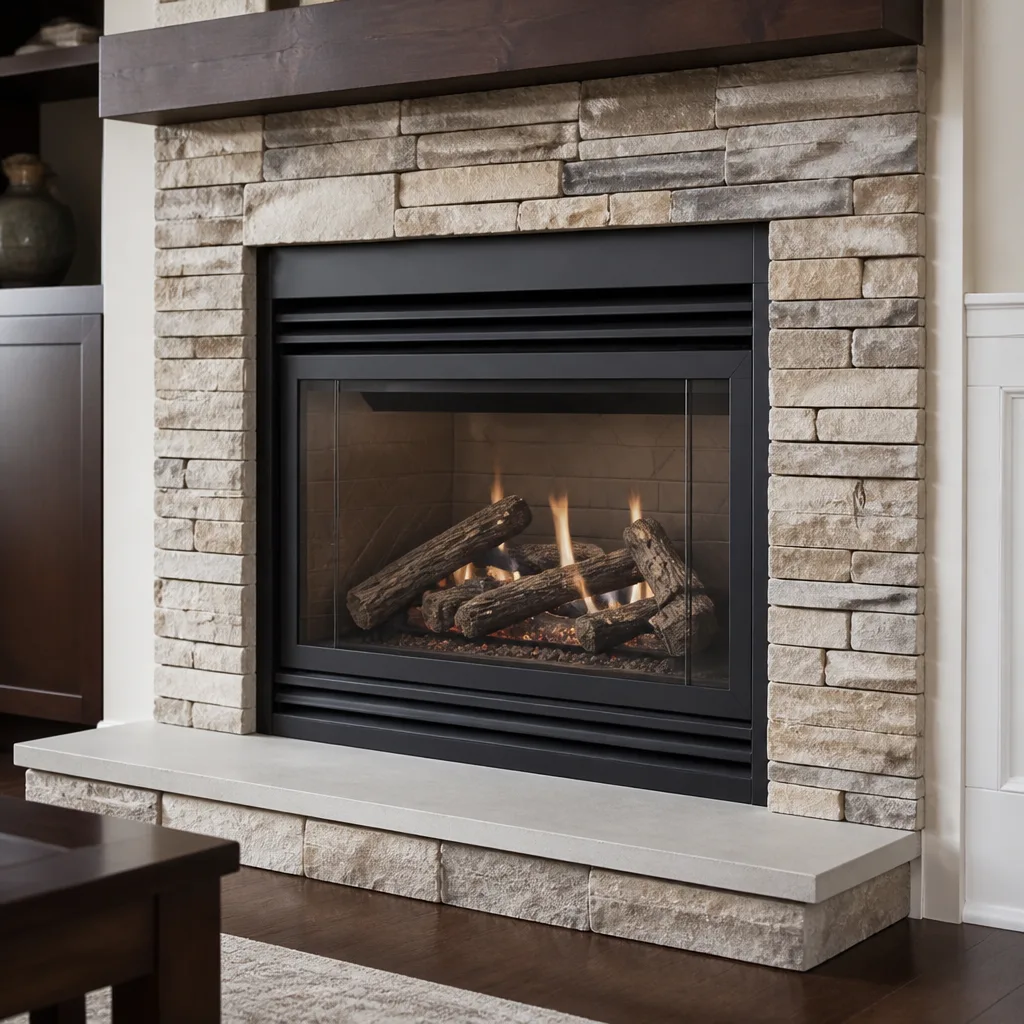 Gas fireplace service
Level 1 sweep and inspection to the NFPA 211 annual standard - flue, crown, cap, and flashing checked and photographed
Chimney sweep logs do not sweep chimneys. They loosen some creosote - which then falls where a brush and vacuum still have to collect it.
Chimney Cleaning Warning Signs: An East Harlem Homeowner’s Reference Guide
Efflorescence, the white chalky staining that creeps across chimney brick, is not a cosmetic issue. It’s water migrating through your masonry and depositing mineral salts on the surface as it evaporates, and it means active moisture intrusion is already underway. Most chimney problems announce themselves this way: through signs that look like something else. A smoky living room gets blamed on window drafts, a summer smell gets written off as old-house character, and a crumbling mortar joint gets called a cosmetic issue until the flue it holds together starts to fail. In this guide we map the symptoms East Harlem homeowners actually notice to the chimney conditions behind them, explain how the neighborhood’s older brick and lime mortar age differently from modern construction, and separate the signs that mean stop using the fireplace now from the ones that can wait for a scheduled appointment.
Quick Answer
The core warning signs that a chimney needs cleaning or service are: a strong smoky or tar-like odor, especially in warm weather; white staining on the brick; dark creosote visible at the flue opening; smoke spilling into the room instead of rising; a draft that pulls the wrong way; and crumbling mortar or loose bricks. Any of these means it’s time for an inspection. Signs like smoke backing up into the room, a smell of gas, or visible cracks through the flue mean stop using the fireplace until a professional looks at it.
Styles & brands we work with
- Sweep & inspection
- Caps & crowns
- Flue relining
- Masonry repair
- Gas fireplace service
Table of Contents
- The Symptom-to-Cause Map: What You’re Actually Seeing
- Efflorescence and Brick Staining: Why White Means Water
- How East Harlem’s Older Brick and Lime Mortar Age Differently
- The Three Stages of Creosote and How to Spot Each One
- Stop Now or Schedule Soon: Sorting the Warning Signs
- Draft Problem or Pressure Imbalance? Telling Them Apart
- The Seasonal Rhythm of Chimney Problems in East Harlem
- What a Real Inspection Involves
The Symptom-to-Cause Map: What You’re Actually Seeing
Most chimney problems get misdiagnosed because the symptom shows up somewhere other than the chimney. Once you know which conditions produce which household signs, the picture gets a lot clearer. Here’s how we map what homeowners describe to what’s usually behind it.
- A smoky, tar-like smell in the living room, worst on warm or humid days: this is the creosote in the flue releasing odor as the air pressure shifts. It’s not “old house smell.” It means deposits have built up enough to be volatile.
- Smoke curling into the room when you light a fire: could be a blocked or partially blocked flue, a cold flue that needs priming, or a draft problem. It gets worse with obstruction and points straight at a cleaning and inspection.
- White, chalky staining on exterior brick: efflorescence, which means water is moving through the masonry. It’s a moisture problem, not a paint problem.
- Dark, shiny, or flaky buildup at the damper or the top of the firebox: visible creosote. The shinier and more glass-like it looks, the more advanced the deposit stage.
- Crumbling mortar joints and spalling brick faces: freeze-thaw damage compounded by moisture intrusion. Common on older masonry, and it can eventually affect the flue’s structural integrity.
- Rust stains or water marks on the firebox or damper: a leaking crown or cap letting water down the flue.
- A rumbling or roaring sound during a fire: unusual draft behavior that can point to a flue fire or an obstruction. Stop using the fireplace and get it looked at.
If you’re recognizing more than one of these, that’s a pattern, not a coincidence. The symptoms cluster because most of them trace back to two underlying conditions: creosote accumulation and water intrusion. Catching them early is what keeps a cleaning from becoming a chimney repair job.
Efflorescence and Brick Staining: Why White Means Water
Efflorescence appears as a white, powdery or slightly crusty deposit on the surface of brick or mortar. It is not mold, and it is not a cosmetic blemish you can scrub away and forget. It’s the visible end of a process: water has gotten into the masonry, dissolved mineral salts as it traveled, and deposited those salts on the surface when it evaporated. The stain tells you water is already moving through the structure. If you wipe it off and it returns, the source is still active.
What causes the moisture in the first place? In a chimney the usual suspects are:
- A cracked or missing chimney cap letting rain straight down the flue.
- A failing crown, the concrete top of the chimney that sheds water away from the brick. Once it cracks, water runs into the masonry instead of off it.
- Deteriorated mortar joints that have gone porous, giving water an easy path in.
- Missing or failed flashing where the chimney meets the roof, letting water track along the base.
Left alone, moisture intrusion feeds freeze-thaw damage. Water soaks into the brick, freezes, expands, and pops the face off, which is the spalling you see as flakes collecting on a roof or a windowsill below. Each cycle opens the masonry a little more. That’s the reason we treat efflorescence as an early alarm rather than a cosmetic complaint. It also means a chimney cap & crown check belongs in the same visit as a cleaning.
Other stains and what they mean
Not every stain is efflorescence. Black soot staining on the exterior above the firebox suggests smoke escaping into the masonry, often from a cracked flue or a failed liner. Rust-brown streaks point at a metal component that’s been wet for a long stretch, usually the damper or a cap. Green or dark biological growth means the brick is staying wet long enough to support it. Each of those is worth an inspection, and each is easier to fix early.
How East Harlem’s Older Brick and Lime Mortar Age Differently
Chimney problems in East Harlem don’t always announce themselves the way they do in newer construction, and the reason comes down to materials. Much of the housing stock here is masonry, and a good share of it was built with brick and lime mortar rather than the Portland cement mortar that dominates repair and new construction today. Those two materials behave differently as they age, and not knowing which you have can lead you to the wrong fix.
Lime mortar is softer than the brick it surrounds. It’s slightly flexible and vapor-permeable, which lets masonry dry out rather than trapping moisture. That’s actually a useful property. The problem is that lime mortar is sacrificial: it deteriorates over time and is meant to be repointed. On an older East Harlem building, the mortar joint is often the first thing to show its age.
Portland cement mortar, by contrast, is harder and denser. When a chimney that was built with lime mortar gets patched with a hard cement mortar, the repair can prevent the wall from drying the way it used to. Moisture stays in the brick, freeze-thaw damage accelerates, and you see spalling and cracking appear next to the “repaired” area. That’s why we look at what the chimney is actually made of before recommending mortar or repointing.
What this means in practice
- On a lime-mortar chimney, hairline cracks and receding joints are expected and can be repointed. Catching them early is the point.
- On any chimney, hard repointing over soft brick is a common reason deterioration spreads. The material has to match the masonry.
- Spalling brick faces and joint loss together often signal freeze-thaw damage, which is more than cosmetic even when it looks like a surface issue.
- Flaking or “delamination” at the roofline deserves a closer look, because that’s where water and freeze-thaw do the most work.
Older masonry also shows moisture problems as discoloration and surface loss rather than the clean structural cracks you’d look for on newer construction. If you’re not sure what you’re looking at, an inspection is the fastest way to know whether it’s a joint issue, a water issue, or both.
The Three Stages of Creosote and How to Spot Each One
Creosote is the tar-and-soot residue that forms from burning wood, and it accumulates in stages. Knowing the stages helps you match what you see to how urgent the situation is. You don’t need any technical training to recognize the general look and texture.
Stage 1: Sooty and flaky
The most basic stage. You’ll see a dry, powdery, black soot, or light flakes that brush off relatively easily. This is the normal deposit that a regular cleaning handles. Seeing stage 1 buildup after a season of burning is expected, not a crisis.
Stage 2: Crusty and hard
The deposit has developed into a hardened, crusty layer that doesn’t wipe away with a brush. You’ll often see it as a rough, dark crusty coating on the flue walls, sometimes mixed with soot. Stage 2 is where deposits become harder to remove and where a routine sweep becomes more involved. It’s a sign you’re cleaning less often than the chimney needs.
Stage 3: Shiny, glass-like, and flaky
The most advanced stage. The deposit looks like a hard, shiny glaze, sometimes with a flaky, bubbled texture, and it can look almost glassy or tar-like. This stage is dense, hard to remove, and the most serious for one reason: it’s highly combustible under the right conditions. A flue heavily coated with stage 3 creosote is a fire hazard, not just a maintenance item. Seeing this means stop using the fireplace and get a professional out.
What drives creosote buildup
- Burning wet or unseasoned wood produces more creosote than dry, well-seasoned wood.
- Not enough air supply (running a fire with a low, smoldering draft) leaves more unburned material to coat the flue.
- Cooling flue gases condense on the flue walls, and a cooler flue deposits more than a warm one.
- A chimney that hasn’t been swept in a long stretch of burning will reach stage 2 or 3 faster.
The reason this matters is fire: a chimney fire can start in a heavily creosote-coated flue, and a crack caused by that fire can be invisible from the room. A cleaning and an inspection catch both.
Stop Now or Schedule Soon: Sorting the Warning Signs
Not every warning sign is an emergency, and not every symptom can wait two months. Sorting what you’re seeing into two buckets is the most useful thing you can do before making a call.
Stop using the fireplace now
These signs warrant an immediate stop on burning and a call for professional service.
- Heavy stage 3 creosote visible at the damper or flue opening. That’s a fire hazard, and you don’t want to add more heat to it.
- Smoke rolling into the room from the firebox, consistently, not just on lighting.
- A strong smell of gas, or a smell you can’t identify coming from a gas appliance fireplace or stove. Those use gas lines, and a gas smell is a reason to shut off and call, never to investigate yourself.
- Visible cracks in the firebox or the flue tiles, or movement in the brickwork around the firebox.
- A rumbling or roaring sound during a fire.
- Water actively coming into the firebox or pooling at the base of the chimney.
Anything on this list means stop, not wait. We don’t recommend trying to diagnose or clear a blocked or cracked flue yourself, and we don’t give DIY steps for it: flue interiors, dampers, and firebox assemblies are not a place to work without the right tools and training.
Schedule within 30 to 60 days
These signs point at developing problems that need professional attention but rarely need a same-hour response.
- Efflorescence or a second return of white staining you’ve wiped off before.
- Soot streaks on the exterior above the firebox.
- Crumbling mortar joints, without movement in the brick itself.
- Stage 1 or 2 creosote buildup at the flue opening.
- A smoky or damp smell in warm weather, without any other symptoms.
- Rust stains or water marks on the damper.
If you’re unsure which bucket a sign belongs in, the answer is a planned inspection rather than a guess. A technician can see what you can’t from the room, and the written estimate sets the price for whatever comes next.
Draft Problem or Pressure Imbalance? Telling Them Apart
A smoky chimney isn’t always an obstructed chimney. In renovated East Harlem apartments, a common culprit is a draft problem created by how tightly the space is sealed. Modern weatherization, new windows, and better insulation all make a home more efficient, and all of them reduce how much air leaks in. A fireplace needs air to feed the fire and to carry smoke up the flue. If the house is too tight, the chimney can’t pull.
Here’s the practical difference to look for:
Flue obstruction
The smoke issue is consistent. It backs up every time you light a fire, regardless of weather. You may see soot streaks at the flue opening, hear a change in the draft, or notice that smoke gathers even with doors and windows closed. The chimney needs a sweep and inspection. A partially blocked or collapsed flue doesn’t get better on its own.
Pressure imbalance
The issue is intermittent and linked to conditions. The fire lights fine one day and smokes the next. Smoke backs up when exhaust fans (kitchen or bath) are running, when windows are open elsewhere, or when the wind hits the top of the chimney. The chimney is usually clear, but the home is creating negative pressure or cross-drafts that override the flue. A flue that’s too short or doesn’t extend high enough above the roofline can also fail to establish draft.
A quick check to organize your evidence
- Note whether smoking happens on every fire or only some.
- Check whether a bath or kitchen exhaust fan is running when it happens.
- Check for soot at the flue opening and at the damper. Soot points toward an obstruction.
- Note whether it’s worse on windy days or when other appliances are on. That pattern points toward pressure.
That’s not a diagnosis; it’s evidence. The technician who inspects the chimney will confirm what’s happening. The important point is that a smoky fire in a weatherized East Harlem apartment could be either problem, and the fix is different. If the flue is obstructed, a cleaning isn’t optional. If it’s a pressure issue, the first step is confirming the flue is clear, then looking at draft and air supply. A chimney sweep and inspection settles the question either way.
The Seasonal Rhythm of Chimney Problems in East Harlem
Chimney problems here follow the calendar more than most people expect, and the shift is predictable. Winter is when creosote accumulates. It’s also when smoke problems get noticed, because that’s when the fireplace is actually running. But the damage stage – the freeze-thaw cycle, the moisture damage, the cracking – is a little later and a little slower.
Spring and summer are when symptoms show up in new ways. Warmer air can turn a creosote-laden flue into a smell source. The tar-like odor that seems to appear in the living room in July is often the same creosote from December and January, becoming volatile as temperatures rise. Homeowners who’ve noticed no problem all winter may get a call in August asking why their living room smells when the AC is on. The answer is in the flue, not the room.
Autumn is when the inspection and cleaning ideally happen. You want the flue clear and inspected before the burning season starts, not after the first cold weekend when everyone in the building runs a fire and the schedule fills up. If a chimney cap or crown is cracked, you want that found and addressed before the freeze, not after the first cycle has already opened the masonry further.
Winter is when frozen precipitation and temperatures drive the water damage side of the checklist. A crown that sheds water properly keeps it off the brick. A crown that doesn’t becomes the direct path for the freeze-thaw sequence. In a tight housing market with tight apartments, the difference between a quick repair and a bigger one is often whether the moisture was caught in the fall or discovered in the spring.
A season-by-season checklist
- Autumn: book the sweep and inspection before burning season starts. Check the cap and crown for cracks or missing pieces.
- Winter: watch for smoke backup and unusual sounds. Don’t burn wet wood. Keep an eye out for water at the firebox after storms.
- Spring: after the last fires, check for new staining, soot streaks, and mortar deterioration. Address the cap and crown now rather than later.
- Summer: investigate any persistent odor. Address moisture staining before the next freeze.
If you’re on the fence about timing, it comes down to one question: is the flue clear or isn’t it? An inspection answers that, and the answer tells you whether to plan the cleaning now or after the season.
What a Real Inspection Involves
A thorough chimney inspection is not a quick glance up the flue with a flashlight. On a proper visit we look at the firebox, the damper, the flue, the crown, the cap, the flashing, and the exterior brick, and we document what we find. For the flue itself, a camera inspection shows the interior condition of the liner, not just the bottom of the flue. That matters with tile liners, where a crack between tiles can be invisible from the firebox but is exactly the kind of defect that lets heat and gases reach the masonry.
What we look for at each point
- Firebox: cracks, gaps in the joints, deterioration of the firebrick.
- Damper: operation, seal, and any rust or water marks.
- Flue interior: creosote stage, obstructions, damage to the tiles or liner, and any cracks between sections.
- Crown: cracks, separation from the brick, and drainage.
- Cap: missing, rusted, or damaged, and whether it keeps out water and animals.
- Flashing and exterior: the joint where the chimney meets the roof, mortar condition, and visible spalling.
When the flue interior is damaged, there are more than one route. Clay tile liners that have deteriorated can sometimes be resurfaced with the HeatShield system, which restores the flue’s inner surface without a full tear-out. Flues that are irregular, offset, or need a full relining call for a flexible liner system. We work with DuraFlex flexible stainless liner systems for those, and with HeatShield, Gelco, and Copperfield for venting and components. The point is to choose the fix that matches the inspection findings, not the most expensive option by default.
We’d rather tell you a cleaning is all you need than find work that isn’t warranted. When the evidence doesn’t support a repair, we say so. When a repair can wait a season, we say that too.
Common Mistakes to Avoid
- Scrubbing off efflorescence and calling it fixed. The white comes back because the water is still moving. Find and correct the moisture source or it will return every season.
- Assuming a smoky room is just a draft from a window or door. A flue obstruction and a pressure imbalance look similar to a homeowner and need different fixes. Note the pattern and get it inspected.
- Burning wet wood because it’s what’s available. Seasoned wood burns hotter and produces far less creosote. What you put in the firebox is the biggest single factor in how fast the flue coats up.
- Skipping the off-season. In a building full of fireplaces, everyone calls in the first cold week. A cleaning in East Harlem booked in autumn is easier to schedule than one booked in the middle of winter.
- Treating a cracked chimney crown as cosmetic. A crown that doesn’t shed water sends it into the masonry, which leads to efflorescence, spalling, and freezing damage. It’s the top of the system for a reason.
- Assuming an older building’s lime mortar can take any patch. Cement mortar over soft brick can trap moisture and speed deterioration. The material has to match the masonry, which is why we check before recommending a repair.
- Reaching for a flashlight and DIY-ing a flue looking for the obstruction. Blocked flues, dampers, and firebox assemblies are not a place for safe do-it-yourself work. A camera inspection is the right tool.
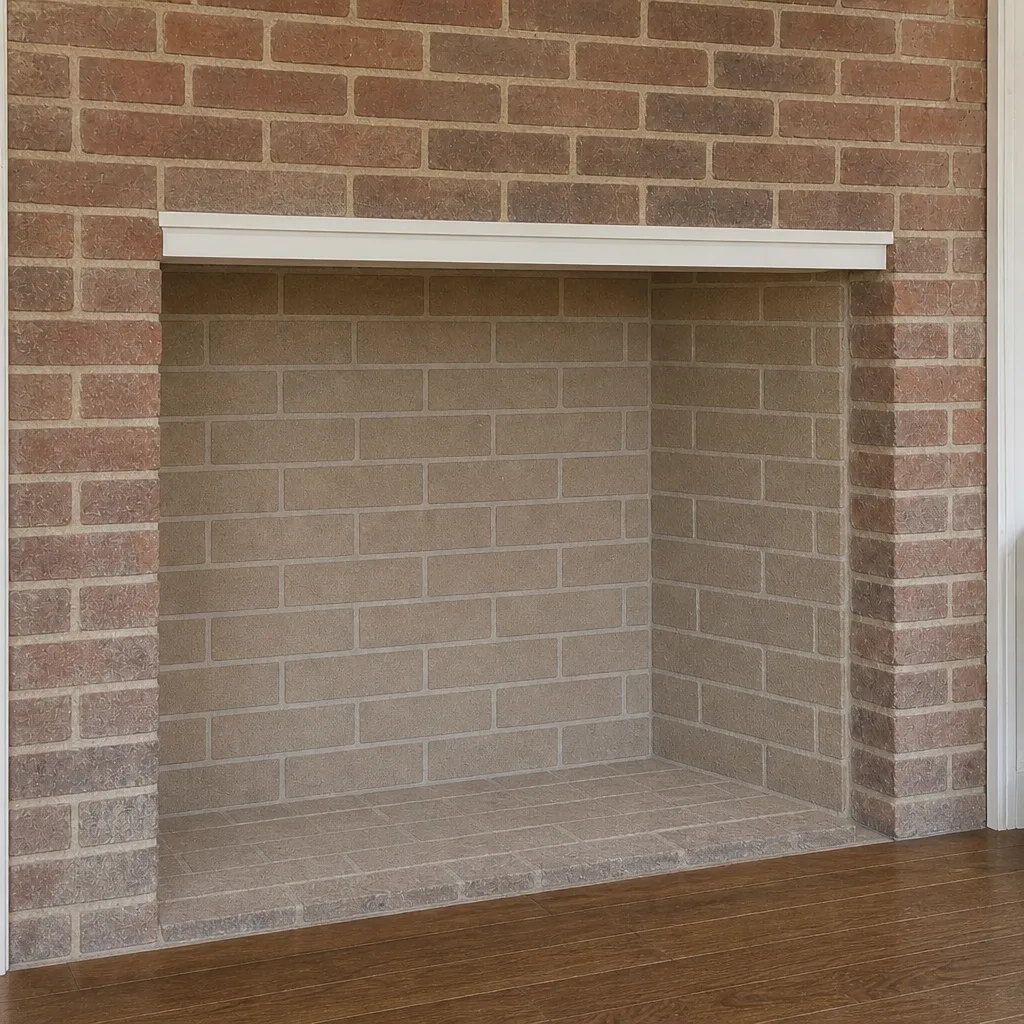
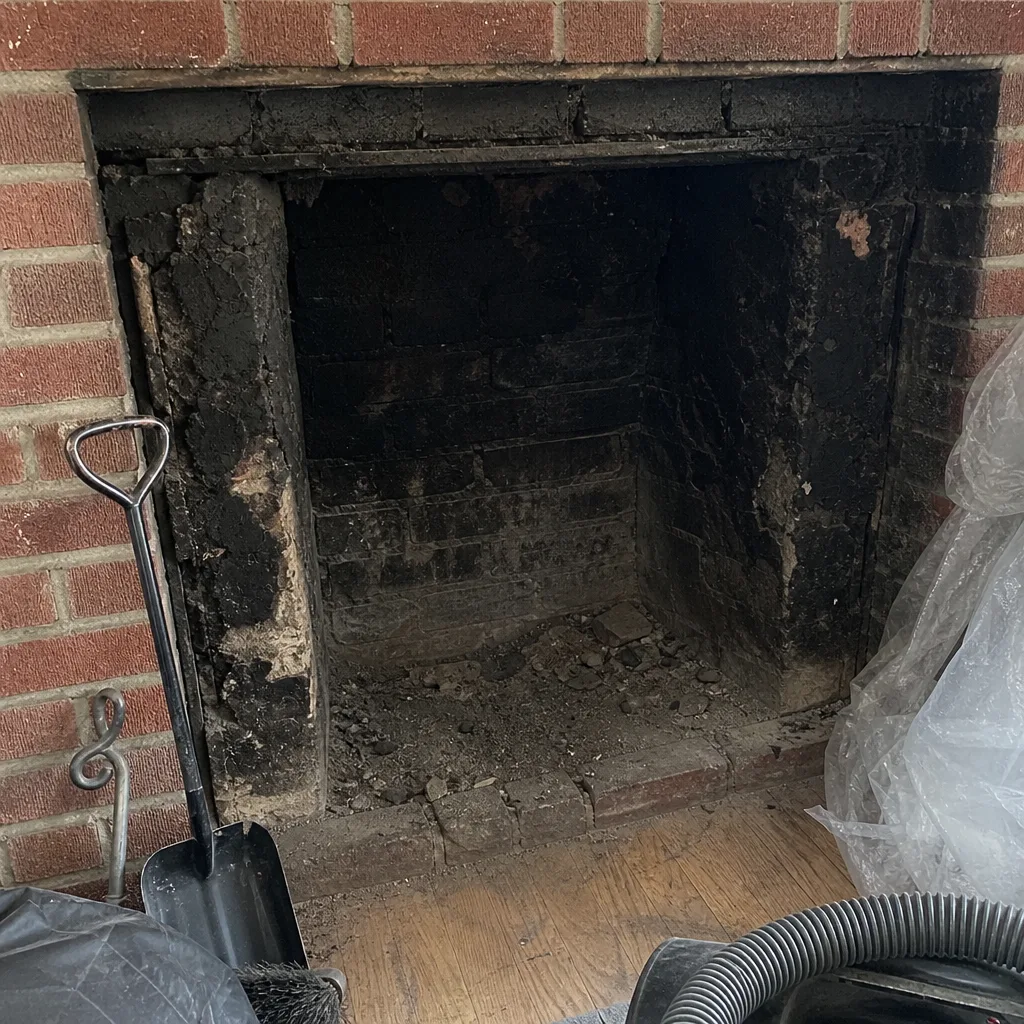
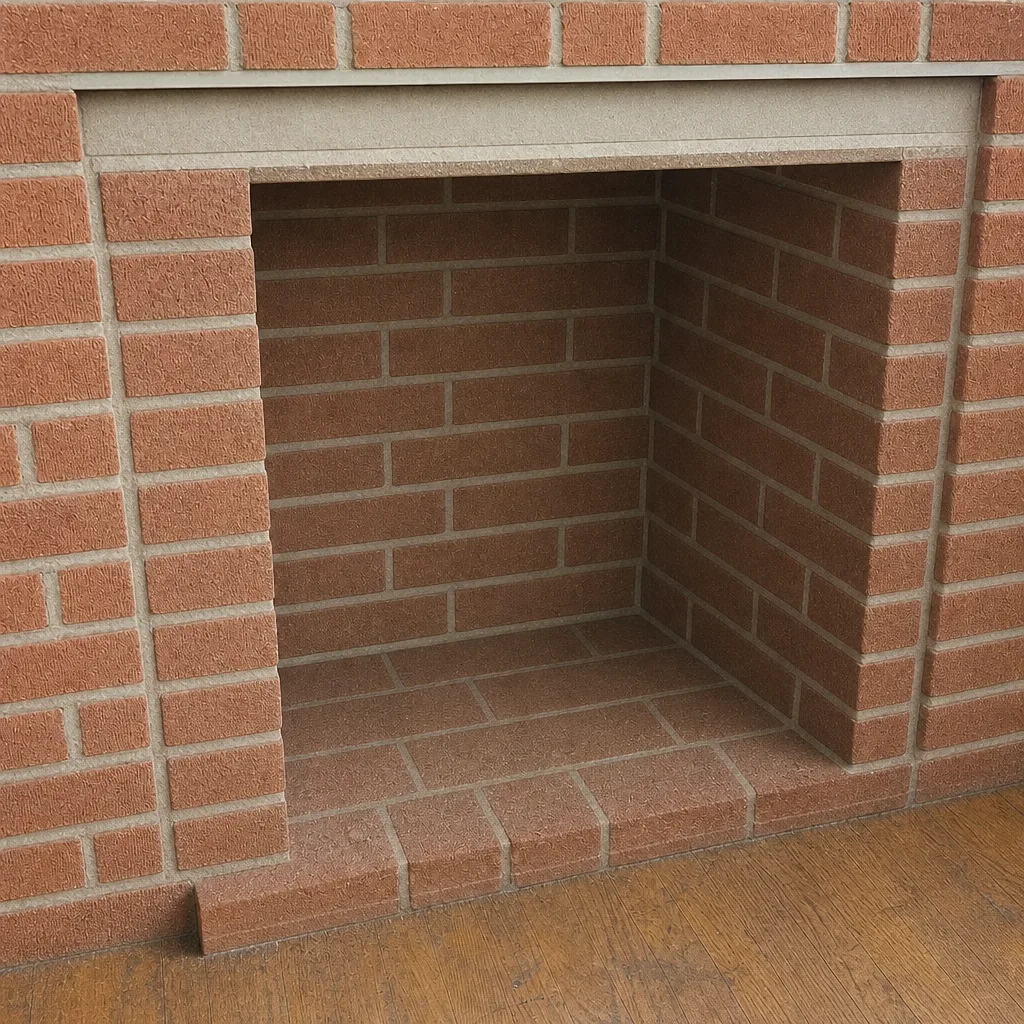
See the difference
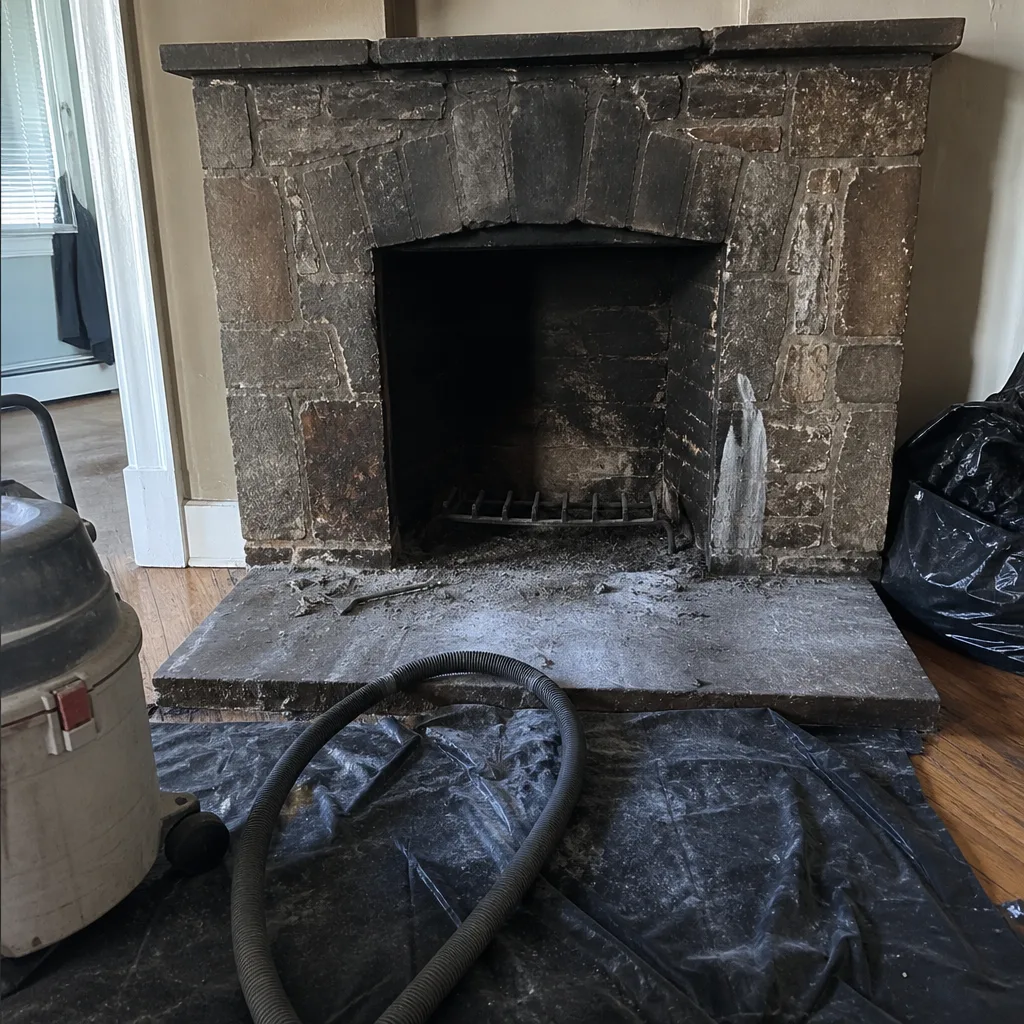 Before
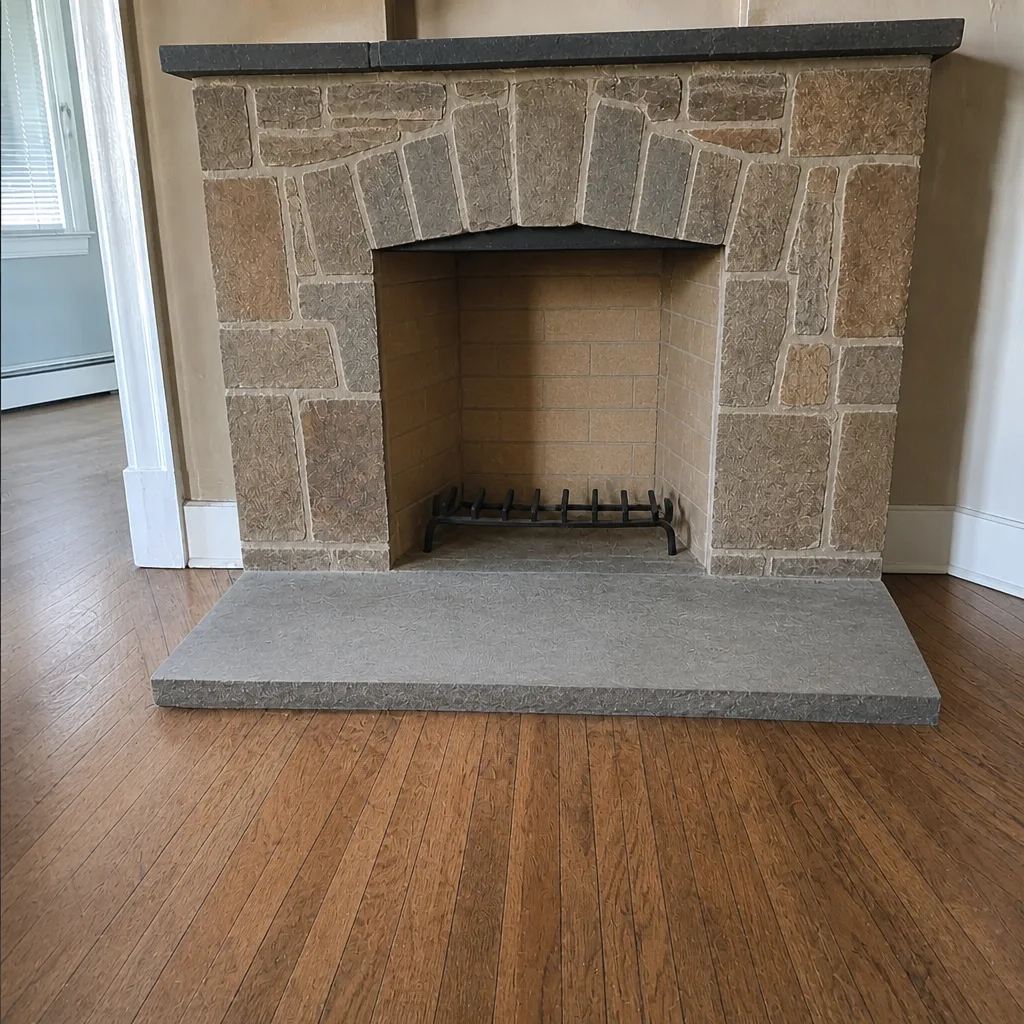 After
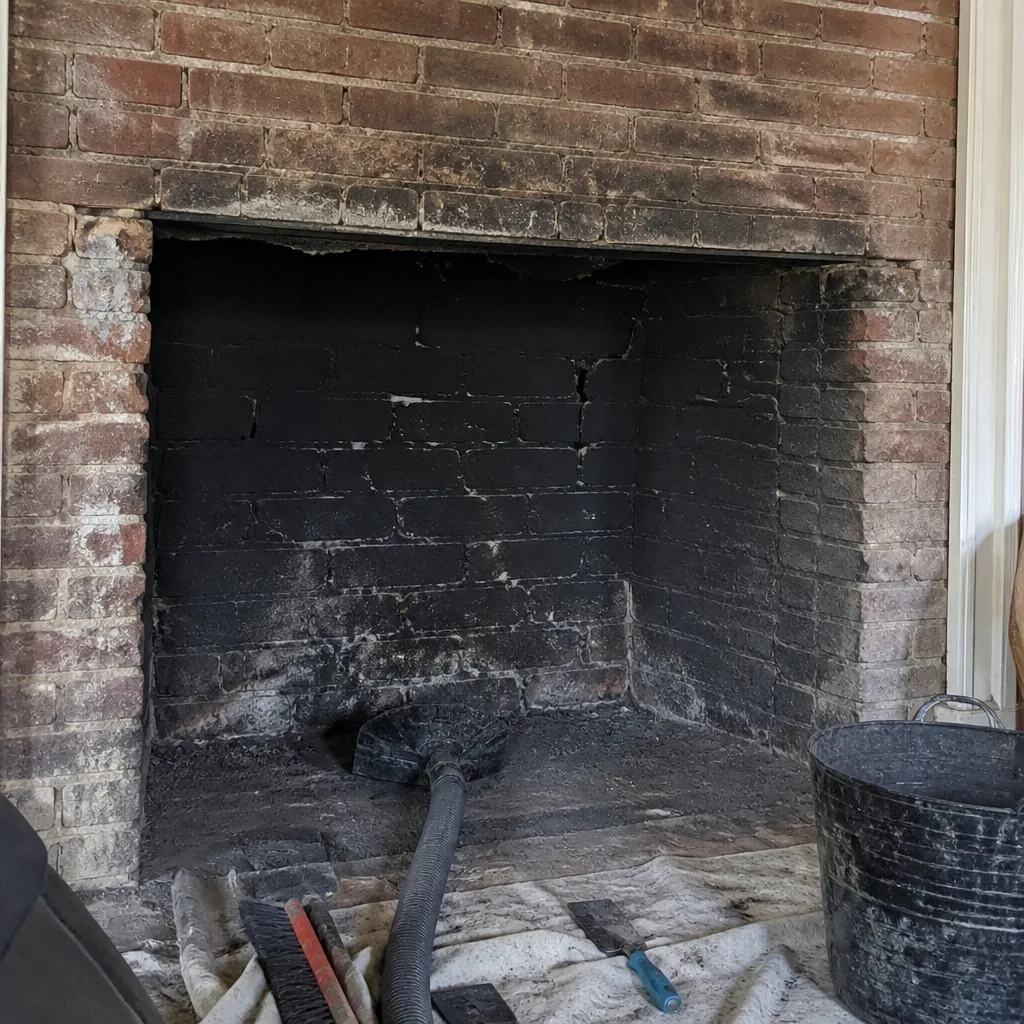 Before
 After
 Before
 After
When to Call a Professional
Call a professional if you see smoky or glassy buildup at the flue opening, smoke entering the room, white staining that returns after cleaning, crumbling mortar or spalling brick, water marks in the firebox, or any smell you can’t identify coming from a gas appliance. Call before you light the first fire of the season if you can’t remember the last time the flue was checked, or if the chimney has never been inspected since you bought the place. If your building was weatherized recently, an inspection is worth doing to rule out a draft problem you’ve never had before.
The calls that worry us least are the ones made early. A chimney that gets a cleaning and an inspection every season rarely surprises anyone. Chimney Sweep East Harlem offers free estimates in East Harlem – call (844) 482-6205. We answer 24/7. Fast dispatch from 7am to 7pm, Sunday through Friday. The local pro is licensed and insured as their state requires, and every estimate is free and written out before any work begins.
Frequently Asked Questions
Once a year is the baseline for a wood-burning fireplace that sees regular use, and more often if you burn a lot, burn unseasoned wood, or notice stage 2 or 3 creosote when you look at the flue opening. Once a year is the standard most chimney professionals recommend, and it’s the best way to catch a creosote buildup before it becomes a fire risk. If you can’t remember the last sweep, that’s the time to schedule one. Call (844) 482-6205 for an exact quote – estimates are free.
Efflorescence means water is migrating through the masonry and depositing mineral salts on the surface as it dries. It’s an active moisture problem, not a cosmetic one, and the source needs to be found: a cracked crown, a failing cap, or porous mortar joints. If the stain returns after you clean it, the water path is still open. Call (844) 482-6205 to have it inspected – estimates are free.
Often, yes. Stage 1 is dry, flaky soot that brushes off easily, stage 2 is a hardened, crusty layer, and stage 3 is the shiny, glass-like, tar-like glaze. What you can see at the flue opening and the damper is usually a good indication of what’s above. Anything shiny and glass-like means stop using the fireplace and get a professional out. Call (844) 482-6205 to book an inspection – estimates are free.
It often is. A smoky, tar-like smell in warm weather is usually creosote releasing odor as the flue warms up or the air pressure shifts, and it’s a known early sign of buildup. A damp, musty smell points more toward moisture intrusion and should also be checked. Either way, a cleaning and inspection confirms what you’re smelling. Call (844) 482-6205 for an exact quote – estimates are free.
If the fire smokes every time regardless of conditions, it’s likely an obstruction. If it’s intermittent and worse when exhaust fans run or windows are open elsewhere, it’s more likely a pressure imbalance from a tight, weatherized home. The chimney needs to be inspected to rule out obstruction first, especially in older East Harlem buildings with lime-mortar chimneys. Call (844) 482-6205 to book an inspection – estimates are free.
It depends on what the camera inspection finds. A deteriorating clay tile liner can sometimes be restored with HeatShield flue resurfacing rather than replaced. Flues that are irregular or offset often need a flexible stainless liner, which is where the DuraFlex system comes in. We recommend based on the inspection evidence, not the most expensive option. Call (844) 482-6205 to get a written estimate – estimates are free.
The Bottom Line
The most useful thing about chimney warning signs is that they show up early, before the problem is expensive. Read them correctly and most repairs stay repairs. Efflorescence means water, not paint. A smoky room in a weatherized apartment is a pressure or draft issue until an inspection proves otherwise. Shiny, glass-like deposits in the flue are a stop-now sign. In East Harlem’s older masonry, softer lime mortar and older brick show their age in their own way, which is why material matters as much as the repair. Our technicians have up to 13 years of experience, and we carry the professional brands – DuraFlex, HeatShield, Gelco, and Copperfield – that get the repair right the first time. Call (844) 482-6205. We answer 24/7. Fast dispatch from 7am to 7pm, Sunday through Friday. Estimates are free, and the written estimate sets the price. For the full range of what we handle, see Chimney Sweep East Harlem.
Written by the team at Chimney Sweep East Harlem.